Picture this: it’s 6 p.m., the kids are running around, dinner’s bubbling on the stove, and your back aches from hours at the desk. You’re craving more energy but the gym feels like a world away. Home strength moves are your gentle answer—they fit right into real life, no fancy gear or big time commitments needed.
Many of us feel that pull between busy days and wanting to feel stronger. Starting at home builds quiet confidence, like noticing you carry laundry upstairs without huffing. It’s approachable for anyone, whether you’re post-work exhausted or juggling family chaos. You’re not alone if gym intimidation holds you back—plenty start right here, in pajamas if needed.
These simple moves spark real change: better mood after a tough day, easier mornings chasing little ones. They boost everyday resilience without overwhelm. Keep reading for easy wins that stick—let’s ease into strength together.
If This Sounds Like You
Tired after work but dreaming of more pep in your step? You’re not alone—many squeeze in movement amid evening routines.
Juggling family chaos with zero time for the gym? It’s common to feel stuck, yet curious about building strength from the living room.
Low-energy days leaving you glued to the couch? We’ve all been there, wondering where to start without big commitments.
Unsure about form or progress? It’s okay—home moves let you go at your own pace, building confidence one breath at a time.
Why Home Strength Moves Feel Like a Warm Hug for Your Body
These moves deliver gentle energy boosts that carry you through the day. Imagine lifting groceries without that familiar strain—strength sneaks in like that. Your mood lifts too, turning “ugh, another Monday” into “I got this.”
Better posture comes naturally, easing desk hunch and hello to standing taller. It ties beautifully into approaches like those in Quick Tips to Maintain Posture All Day, making daily tasks feel lighter. No equipment means you start wherever you are.
Steady progress builds real resilience, like chasing kids without winded breaths. Many notice these shifts in just weeks. It’s forgiving—perfect for real life, where perfection isn’t the goal.
Plus, they fit low-energy moments, sparking joy without pressure. Your body thanks you with better sleep and fewer aches. Ready to feel that hug?
Try This First: Your 5-Minute Squat-and-Reach Starter
Stand with feet hip-width, like prepping to sit in a chair. Inhale, lower as if sitting back slowly—knees over toes, chest up. That’s your squat; hold for a breath.
Exhale, reach arms overhead like grabbing something high on a shelf. Feel the gentle stretch? That’s your reach. Do 5-8 reps, pausing if wobbly—it’s normal at first.
Tie it to everyday: mimics standing from the couch, building that ease. Progress sneaks up, turning “tough” into “totally doable.” Many love this as their daily reset.
Time it to your favorite song snippet—just 5 minutes. Breathe easy, smile through it. You’ve got the foundation now.
Your Go-To 5-Step Beginner Circuit for Everyday Strength
This 10-15 minute flow repeats 2-3 times. Rest 30 seconds between steps, listen to your breath. Use a wall or sturdy chair—no extras needed. Let’s build that steady strength.
-
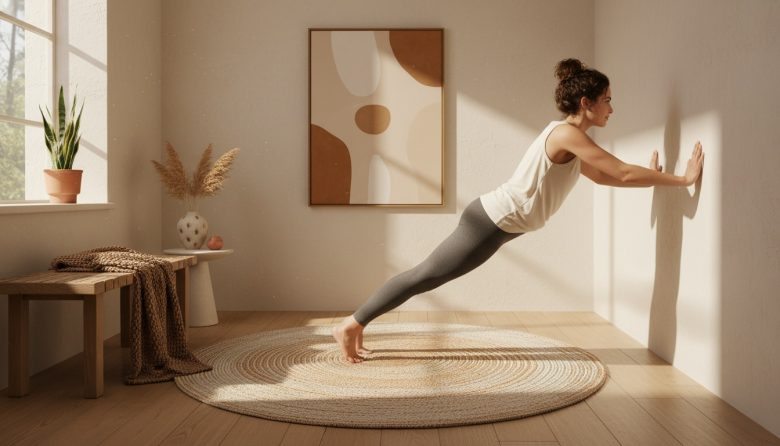
Step 1: Wall Push (targets chest and arms). Face a wall, hands shoulder-height, step back slightly. Bend elbows to lean in, then push away—like a gentle hug to the wall. 5-8 reps. Modify: stand closer if needed. Everyday win: easier pushing strollers or doors.
-
Step 2: Chair Squat (legs and balance). Stand in front of a chair, feet hip-width. Lower until you almost sit, then stand—don’t fully plop. 6-8 reps. Hold chair arms for support. Feels like? Getting up from family dinners smoother.
-
Step 3: Seated March (core gentle warm-up). Sit tall, lift one knee like marching in place, alternate. 8 per side. Add arm swings for fun. Low-energy friendly—think desk breaks that energize.
-
Step 4: Wall Angel (shoulders and back). Back to wall, arms at sides like goalposts, slide up and down slowly. 6-8 reps. Keep elbows touching. Links to posture ease, prepping for hugs without shoulder twinges.
-
Step 5: Standing Calf Raise (lower legs). Hold a counter, rise onto toes, lower slow. 8-10 reps. Imagine reaching a high pantry shelf. Builds that spring in your step for walks.
After rounds, shake it out—celebrate finishing. It flows like a mini adventure. Ties into routines like Busy Day Quick Strength Routine Guide for those rushed moments.
Listen to Your Body: Steady Ways to Build From Here
Progress by adding one rep or a 2-second hold next time. No rush—many see energy shifts in weeks. Track in a notes app: “Felt stronger folding laundry today?”
Rest days matter: gentle walks or stretchy evenings recharge you. Hydrate, eat what nourishes—strength grows in recovery. It’s okay to pause if life pulls you away.
Notice daily ease, like stairs feeling lighter? That’s your win. Pair with mood check-ins for holistic progress. You’re building for life, not just looks.
Make It Your Own: Twists for Busy Days and Fun
Mornings? Do half before coffee for an energy kick. Evenings? Wind down with seated versions amid family TV time—kids can join the marches.
Theme it: upbeat playlist turns circuit into dance party. Low-energy? Swap stands for sits, like chair pushes echoing How to Tone Chest Muscles with Floor Presses but upright.
Props handy? Water bottles as light weights. Family edition: race reps for laughs. Personalize to your rhythm—what lights you up?
Busy twist: split into two 5-minute bursts. It’s flexible, like you. Experiment and note what sticks.
Frequently Asked Questions
Do I need any equipment to get started?
No—your body, a wall, and sturdy chair do the trick. Many thrive with just that, fitting seamlessly into home life. Start bare, add household items later if fun.
How often should I do these moves?
Aim for 3-4 days a week, resting between to recover. Listen to your energy—it’s okay to shift based on your week. Consistency over perfection builds the habit.
What if I’m sore the next day?
That’s your body adapting—totally normal for beginners. Gentle walks, warm showers, and extra water ease it. Scale back reps next time; soreness fades as you strengthen.
Can I do this if I have joint concerns?
Yes, with modifications like shallower squats or seated options. Go slow, breathe through it—we’re all unique. If unsure, chat with a doc, but many with tweaks love the gentle build.
How do I know it’s working?
Daily tasks feel easier: less huffing on stairs, better posture holding. Track those “aha” moments in a journal. Steady wins show up in energy and ease, not just mirrors.
What’s one move you’ll try first? Share below—we’re cheering you on. Pin this guide by your fridge for those ready moments.