Picture this: you’re at your desk after a long day, slouching forward, feeling that familiar ache in your lower back. Or maybe you’re chasing after kids at the park, wobbling a bit as you bend down to tie a shoe. Everyday moments like these highlight how a weak core sneaks up on us, making simple tasks feel exhausting. That’s where planks come in—a no-equipment gem that builds strength gently, right from your living room floor.
Planks target those deep core muscles that support your spine, improve posture, and boost overall stability. No fancy gym needed; just your body weight and a few seconds of focus. Many folks discover they stand taller, move easier, and even sleep better after consistent practice. Imagine gardening without the usual twinges or playing with family feeling more energized.
You’re not alone if you’ve shied away from core work before—it’s common to worry about getting it wrong or needing advanced skills. But planks are forgiving and scalable for beginners. We’ll walk through a simple progression that adds up quickly, turning shaky starts into confident holds. Small wins build big confidence, and soon you’ll feel that core hug of strength.
Ready to feel steadier in your daily life? Let’s ease in with relatable signs and straightforward steps. You’ve got this—one breath at a time.
If This Sounds Like You
Struggling to sit up straight after a long day at work? You’re not alone; many feel that pull from hours hunched over screens.
Feeling wobbly during walks or playtime with family? It’s okay if bending or twisting leaves you off-balance—life’s routines test us all.
Tired of back aches from a weak middle? Those nagging pains after lifting groceries or vacuuming are common signals.
Dreaming of a stronger core without gym intimidation? Plenty of us want that stability boost from home, no pressure.
Why Planks Feel Like a Hug for Your Core
Planks engage your entire midsection—abs, obliques, and back muscles—in a gentle isometric hold. Unlike crunches, they build endurance without repetitive strain, perfect for posture fixes. You’ll notice carrying bags feels lighter and standing longer doesn’t tire you out.
Think about everyday wins: easier mornings getting out of bed, or chasing toddlers without breathlessness. Many start shaky, but that’s normal—your core is waking up. Improved stability even helps with balance during low-energy days.
Beyond physical perks, planks boost confidence. That “I did it” feeling spills into other areas, like tackling house chores with pep. Pairing this with ideas from Quick Tips to Avoid Workout Fatigue keeps things sustainable and fun.
It’s a low-impact way to fortify your foundation. Your body thanks you with more energy for what matters most.
Try This First: Your 10-Second Confidence Plank
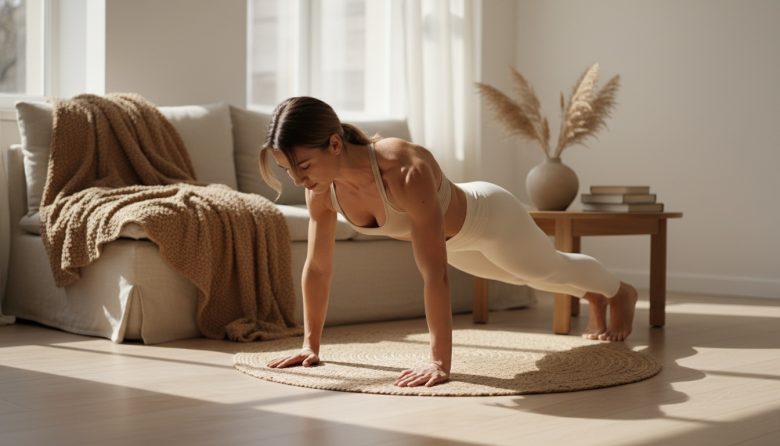
Start on your knees for this beginner-friendly version—no full push-up position needed yet. Place forearms on the floor, elbows under shoulders, and knees hip-width apart. Lift your hips to form a straight line from knees to head, like a table top.
Keep your gaze down, neck neutral, and belly button pulled toward your spine. Breathe steadily—in through nose, out through mouth. Hold for just 10 seconds, then rest. You’ve nailed your first one!
If forearms feel tough, use hands like a high plank on knees. Shorten to 5 seconds if needed—progress comes from consistency. Smile through it; this builds the base for everything else.
Many feel a gentle burn right away—that’s your core activating. Do 3 rounds, resting 30 seconds between. You’re stronger already.
Your 4-Week Plank Power Plan to Build Real Strength
This plan ramps up gently over four weeks, turning short holds into solid strength. Practice 4-5 days a week, with rest days for recovery. Each week adds a layer, like stacking blocks for a sturdy tower.
Track your holds in a notebook or phone note—seeing progress motivates. Listen to your body; shorten if sore. Beginner mods keep it accessible for all.
Here’s your step-by-step progression:
- Week 1: Build Hold Time
Start with knee planks, aiming for 3 sets of 20 seconds. Rest 45 seconds between. Mod: Hands on floor if forearms ache. Tip: Squeeze glutes lightly for stability. - Week 2: Add Side Stability
Introduce side planks on knees: 3 sets of 15 seconds per side. Alternate with front planks. Mod: Lean against a wall for support. Rest 30 seconds; focus on steady breathing. - Week 3: Introduce Movement
Full forearm planks now—3 sets of 30 seconds. Add shoulder taps: lift one hand, tap opposite shoulder, alternate slowly. Mod: Stay on knees. Builds dynamic control without rush. - Week 4: Daily Integration
Mix it up: 40-second front plank, 20-second sides, plus 10 plank walks (step hands forward/back). Do once daily. Mod: Wall version for travel days. Celebrate with a favorite tune.
This sequence mirrors advice in How to Increase Endurance with Hold Exercises, emphasizing quality over quantity. By week four, everyday tasks feel empowered. Adjust paces as needed—your journey, your rhythm.
Make It Your Own: Plank Twists for Busy Days
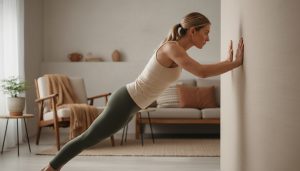
Wall planks suit low-energy mornings: stand facing wall, hands shoulder-width, lean in at angle, hold 20 seconds. Perfect for apartments or quick resets.
For fun, try plank walks: from knee plank, step right hand/foot forward, then left, like inching along. 10 steps per set adds playfulness without overwhelm.
Grab a friend for partner planks: face each other in plank, high-five hands. Builds community and accountability. What feels good to you? Mix variations weekly.
These tweaks fit family routines or work breaks. Inclusivity means options for chair planks too—sit tall, hands on seat, lift hips. Personalize for joy.
Spot the Sneaky Mistakes (And Smile Through Fixes)
Hips sagging? Cue: Imagine a string pulling your belly to ceiling. Tuck pelvis slightly; check in mirror first time.
Breath-holding common—exhale fully each breath. It steadies you, prevents tension build-up. Practice with eyes closed for focus.
Head dropping or arching back? Align ears over shoulders. We’ve all been there—laugh, reset, retry shorter hold.
Neck strain? Soften jaw, gaze neutral. These slips teach body awareness kindly.
Staying Plank-Consistent: Gentle Habits That Stick
Tie planks to TV time: one set per commercial break. Or morning routine, post-coffee.
Track wins weekly; share with a buddy for cheers. Link to 4-Week Home Strength Building Routine for full-body synergy.
Forgive off days—consistency over perfection wins.
What’s your first plank hold time? Share below—we’re cheering you on. Try one today and feel the shift!
FAQ
Can I do planks if I’m a total beginner?
Absolutely—start with knee or wall versions for 5-10 seconds. Many beginners build to 30 seconds in weeks. It’s designed for you; no rush, just steady tries.
What if my back hurts during planks?
Back pain often means form tweak: avoid overarching, engage core fully. Shorten holds, rest more. If persists, ease off and chat with a doc—better safe.
How often should I plank to see changes?
4-5 days weekly yields noticeable posture and energy boosts in 2-4 weeks. Rest days prevent fatigue. Listen to your body for perfect rhythm.
Do I need equipment for these?
Nope—just floor space or wall. Towel under elbows adds comfort if hard surfaces bug you. Home-friendly all the way.
Is it normal to shake a lot at first?
Yes, totally—muscles firing up! Shaking fades with practice as endurance grows. Embrace it as progress sign; breathe through.