Picture this: you’re lugging grocery bags up the stairs, and your arms start shaking halfway through. Or maybe you’re trying to lift your little one for a hug, but it feels like a workout already. It’s more common than you think—many of us feel that subtle arm fatigue in everyday moments, especially after long days or when life’s busier than usual.
That’s where wall push-ups come in, my friend. They’re a gentle, no-equipment way to wake up your arms, building real power without the intimidation of floor push-ups. You’ll feel stronger carrying those bags, playing with kids, or just holding your posture with confidence. And the best part? They’re fun to progress, step by loving step, right from your living room wall.
I’ve chatted with so many folks just starting out, and wall push-ups have been their game-changer. They target your triceps, shoulders, and chest safely, mimicking the full push-up motion but with your body’s weight dialed way back. Stick with me, and we’ll make this approachable, with tweaks for your energy levels and checklists to celebrate every win.
If This Sounds Like You
You’re dragging after a full workday, and even simple tasks like pushing a laundry basket feel tiring.
Traditional gym push-ups look daunting, so you’ve skipped arm strength altogether.
Your arms give out quickly during yoga flows or reaching for high shelves.
You crave stronger arms for hobbies like gardening or tennis, but without overwhelming routines.
Why Wall Push-Ups Build Real Arm Power, Step by Loving Step
Wall push-ups aren’t just easy—they’re smart. They engage your triceps for that pushing power, strengthen shoulders for stability, and light up your chest for overall upper-body resilience. It’s like training for real life, where you need arms that last through the day.
Unlike crunches or bicep curls, they work multiple muscles together, just like carrying boxes or playing catch. Many people notice less shoulder slump after a couple weeks. Plus, the wall support lets you focus on form, building a solid foundation without strain.
Science backs it lightly: these moves recruit fast-twitch fibers for power, much like full push-ups but gentler. You’re not alone if you’ve felt weak before—it’s okay, and this is your inviting entry. As you gain arm power, blending in how to improve balance with single-leg stands can enhance your whole-body stability seamlessly.
Try This First: Your Foolproof Starting Setup
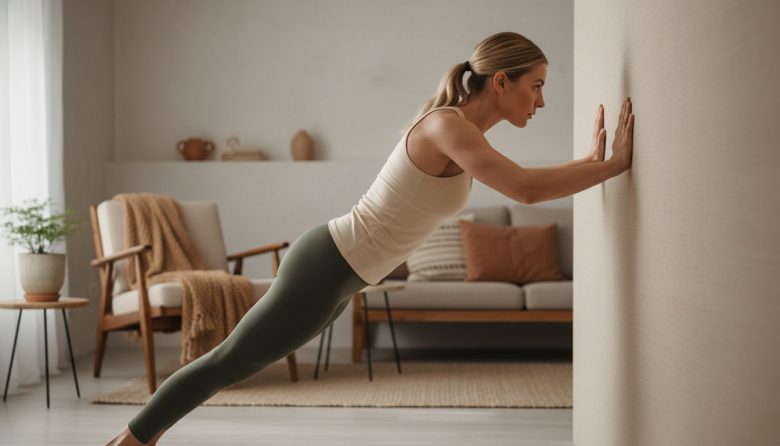
Stand facing a sturdy wall, about arm’s length away—think kitchen counter height if you’re practicing there. Place your hands shoulder-width apart at chest level, fingers spread for comfort. Feet hip-width, knees soft, like you’re about to give the wall a friendly high-five.
Breathe deep: inhale as you lean in, exhale as you push back. Keep your body in a straight line from head to heels—no sagging hips. Try just 3-5 reps to feel it out, smiling through the gentle burn.
This setup feels natural, like pausing during a busy morning coffee break. It’s your zero-pressure start, perfect for low-energy days. You’ll sense your arms waking up right away.
Your 5 Simple Steps to Power Up from the Wall
-
Master perfect form basics first—it’s your power foundation. Feet flat, hands aligned with shoulders, core lightly engaged like you’re bracing for a light hug. Lean in slowly until your nose nearly touches the wall, then push back strong. Do 5-8 reps, pausing if needed.
Beginner mod: Step closer to the wall for less challenge—many start here and love it. Feel that tricep squeeze? That’s your arms saying hello. Practice daily for a week; it’s okay if it feels wobbly at first.
-
Add reps gently once form clicks. Aim for 10-12 per set, resting 30 seconds between. Breathe steadily—out on the push, in on the lean. Track in a notebook: “Felt good today!”
Mod for beginners: Do knee-supported versions by stepping feet back slightly. This builds confidence without overwhelm. Picture doing it while dinner simmers—easy habit.
-
Slow it down for deeper strength. Take 3 seconds to lower, 3 to push up—time it like a slow song verse. This amps muscle time under tension, boosting power fast.
Low-energy tweak: Half-speed if full slow feels much. You’ll notice arms firmer for daily lifts, like groceries. Many share this step transformed their endurance.
-
Introduce pauses for extra oomph. Hold the lean-in position for 2-3 seconds, breathing calm. Then explode back—feel the power surge? Do 8 reps with one pause each.
Beginner option: 1-second holds to start. Pair with how to increase endurance with hold exercises for full-body gains. It’s playful, like challenging yourself mid-commercial break.
-
Weekly check-ins keep you motivated. Sunday evenings, note: How many reps now? Any easier push in life? Adjust—more rest if sore, or add a set if buzzing.
Mod: Use a phone mirror for form checks. Celebrate with tea. This step turns practice into progress you own.
Make It Your Own: Playful Twists for Every Mood
Feeling playful? Adjust wall height—higher for easier days, lower (like countertop) for more challenge. Time sets to your favorite song chorus, turning reps into rhythm.
Low-energy mood? One-arm assist: light hand on hip, other does most work. Or themed sets, like “one for each family member.” It’s flexible, suiting family routines or solo evenings.
Want variety? Alternate with wide-hand grips for chest focus. These twists keep it fresh, like customizing your coffee. You’re building power your way.
Fitting Wall Push-Ups into Real-Life Routines Without Stress
Morning ritual: 5 reps while coffee brews—wakes arms gently. TV breaks: One set per commercial, sneaky strength while relaxing.
Family fun: Challenge kids to match your reps, laughing through it. Stack with walks—do them pre-stroll for powered steps. No big changes needed.
Work-from-home? Wall near desk for mid-Zoom pauses. As you strengthen arms, try how to strengthen feet and ankles daily to ground your full power. It fits like an old glove.
Spotting Wins and Gentle Tweaks Along the Way
Progress signs: Easier grocery hauls, less arm shake in poses. Notice firmer feel? That’s power building. Weekly reps up by 2-3? Huge win.
Feels too much? Back off reps, add rest days—it’s okay. Wrist twinge? Soften grip, shake out. Sore shoulders? Ice and lighter sets.
You’re not alone; many tweak and thrive. Journal wins: “Pushed laundry basket no sweat!” Gentle nudges keep joy in the journey.
FAQ
How often should I do wall push-ups to see arm power improvements?
Three to four times a week works wonders for most, giving muscles recovery time. Start with 10-minute sessions, building as feels good. Consistency over intensity—many see changes in 2-3 weeks. Listen to your body; rest if needed.
What if my wrists hurt during wall push-ups?
Shift to loose fists or place hands on a folded towel for padding—eases pressure right away. Straighten wrists fully, or try forearm leans as a bridge. It’s common and fixable; gentle warm-ups help too. Soon, discomfort fades as form strengthens.
Can wall push-ups help with other areas like core strength?
Yes, they engage your core for stability, like a bonus plank light. Keep hips aligned to amp it up naturally. Over time, you’ll feel steadier everywhere. Pairing builds whole-body wins without extra effort.
I’m over 50—are wall push-ups safe for me?
Absolutely, they’re joint-friendly and scalable—many over 50 swear by them for daily ease. Start slow, breathe easy, consult doc if any doubts. We’ve seen folks regain shopping confidence effortlessly. Age is just a number here.
How do I know when to move to floor push-ups?
When 20 wall reps feel solid and strong, try knee push-ups as a bridge. Test: Can you hold a 10-second lean easily? Progress at your pace—no rush. Celebrate the step; you’re ready when it excites.
What’s your first wall push-up moment that made you smile? Try a set today and share in the comments—we’re all cheering you on.