Ever catch yourself grabbing the handrail a little too tightly on the stairs? Or maybe that quick pivot to grab the phone from the counter leaves you wobbling like a top about to spin out. You’re not alone—those little balance hiccups happen to so many of us as life speeds up. The good news? Single-leg stands are a simple, game-changing way to build steadiness that spills over into your everyday moments.
Picture this: stronger ankles and a rock-solid core mean you move through your day with more confidence, whether you’re gardening in the yard or chasing after grandkids at the park. These stands aren’t just exercises; they’re your secret weapon against falls, better posture, and that empowering feeling of being grounded. And the best part? You can start right now with tiny tweaks that fit your life, progressing at your own pace for real, lasting results.
Improving balance isn’t about fancy equipment or gym memberships—it’s about reclaiming that natural stability we all crave. In the next few minutes, you’ll get a clear path: from your first supported stand to fun variations that keep things fresh. Stick with me, and you’ll feel the difference in how you carry yourself, one leg at a time.
If This Sounds Like You
You reach for the wall when standing on one foot feels iffy during a stretch. It’s okay—many folks notice this after long desk days.
Busy schedules leave you feeling a bit unsteady on uneven sidewalks or during family game nights. You’re in good company; life throws off our equilibrium sometimes.
Maybe yoga tree pose or even brushing your teeth solo-leg style tips you over. No worries—starting wobbly is where everyone begins, and that’s perfectly normal.
Or perhaps low-energy evenings make you skip movement altogether. We’ve all been there, and gentle balance work can fit right in without extra effort.
Why Single-Leg Stands Unlock Everyday Stability
Single-leg stands strengthen your ankles, core, and those tiny stabilizing muscles you didn’t even know you had. They sharpen proprioception—that inner sense of where your body is in space—making daily tasks feel effortless. Think better posture as you stand at the kitchen counter or chase the bus without a second thought.
Real-life wins? Imagine kneeling to weed the garden without toppling or pivoting smoothly during a hug from a speedy toddler. Folks who’ve added this to their routine report fewer stumbles and a quiet confidence boost that carries through work stress or family routines.
Science backs the fun: studies show consistent practice cuts fall risk, especially as we age, but it’s never too early—or late—to start. Your body loves the challenge, responding with quicker reflexes and that satisfying “I got this” vibe. Plus, it’s low-impact, so it pairs beautifully with other moves for overall strength.
Try This First: Your 30-Second Daily Starter
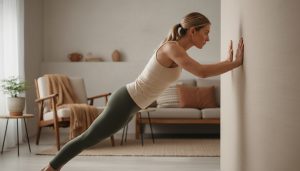
Stand tall with your back against a sturdy wall, feet hip-width apart. Shift your weight to one foot, lifting the other knee to a comfortable height—like hip level if possible. Hold for 30 seconds, breathing deeply and steadily.
Keep your eyes open and gaze at a fixed point ahead. If needed, rest one hand lightly on the wall for support—it’s your beginner best friend. Switch legs and repeat. That’s it—your gateway to balance without overwhelm.
Feel a gentle sway? Smile and breathe through it; your muscles are waking up. Do this once a day, and you’ll notice steadier steps in just a week. Many start here on low-energy mornings, building from that solid base.
Follow This 5-Step Path to Steady Single-Leg Stands
Ready to level up? This progression builds confidence layer by layer, with checklists and mods for every step. Track your wins in a notebook or phone note—celebrate the small stuff!
- Step 1: Anchor with Support (30 seconds per leg)
Place one hand on a chair or wall. Lift one foot, knee bent softly. Checklist: tall spine, relaxed shoulders, even breaths. Beginner mod: knee lower if tight hips call. Do 2-3 sets daily. - Step 2: Go Hands-Free (Build to 45 seconds)
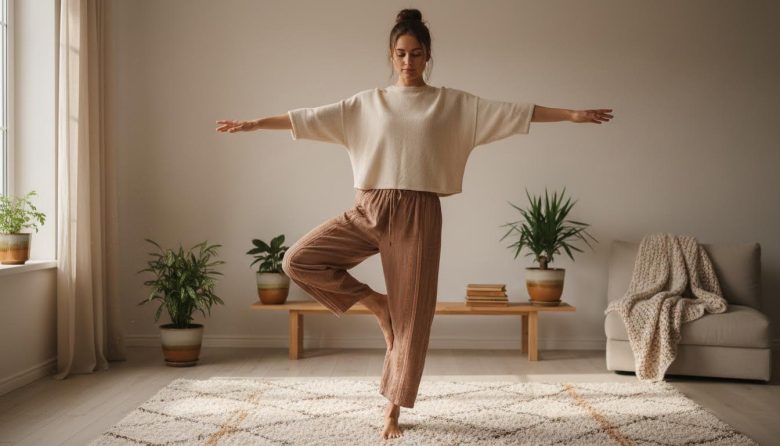
Release the support once Step 1 feels easy. Arms at sides or out for balance. Checklist: engage core like hugging your belly button, steady gaze forward. Mod: soft surface like a rug for ankle kindness. Progress when 30s flies by. - Step 3: Eyes Closed Challenge (20-30 seconds)
Same stance, but close your eyes gently. This amps proprioception big time. Checklist: soft knees, imagine roots growing from your standing foot. Mod: brief bursts at first—5 seconds builds courage. Open eyes if needed; you’re training trust. - Step 4: Add Movement (Arm Circles or Reaches, 30 seconds)
Circle arms slowly or reach side to side. Checklist: controlled motion, no rushing, smile at the fun wobble. Mod: smaller circles for beginners. Ties into full-body flow, like in the Busy Day Quick Strength Routine Guide. - Step 5: Real-Life Tests (Everyday Integration, 1 minute total)
Try while brushing teeth, waiting for coffee, or queuing at the store. Checklist: quality over perfection, note what feels good. Mod: one leg at a time, alternate days. You’ve arrived—balance is now your habit!
Each step takes just minutes, stacking naturally. If a day slips, no sweat—pick up where you left off. You’ll love how this path turns “wobbly” into “wow.”
Make It Your Own: Twists for Fun and Fitness
Love cushions? Stand on a folded towel or yoga block under your standing foot for an ankle adventure. It’s playful and preps you for real-world unevenness like beach walks.
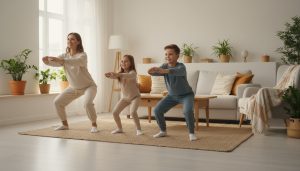
Got a partner? Face each other, hold hands loosely, and stand single-leg together—laughter guaranteed, bonds strengthened. Or theme it: superhero pose while the kettle boils.
For all levels, try slow marches in place before lifting fully. Add weights later if strength calls, or keep it bodyweight pure. When blending with routines like the How to Add Strength to Your Morning Routine, toss in a stand for extra stability spice.
Outdoor twist: tree roots or park benches as natural supports. The variety keeps boredom away, turning practice into joy. You’re crafting a routine that fits you perfectly.
Slip It into Your Day Without Extra Time
Waiting for the microwave? Single-leg stand. TV commercial break? Perfect two-leg swap. These micro-moments add up without stealing from your schedule.
Mornings rushed? Pair with tooth-brushing or coffee pour, as in morning strength tweaks. Evenings winding down? The Evening Wind Down Strength Plan for Relaxation welcomes a gentle stand to ease tension.
Low-energy days? Wall-supported only, eyes open. Family routines? Involve kids—turn it into a game. It slots in seamlessly, boosting stability amid chaos.
Workday hack: under-desk lifts during calls. No gym needed; your day becomes the workout. Effortless integration means consistency wins.
What If It Feels Wobbly? Gentle Fixes for Everyone
Shaky starts are normal—your balance system is recalibrating. Shorten holds or add more support; progress comes with patience.
Fatigue hitting? Barefoot on even floors helps, or pick supportive shoes sans thick soles. Rest days are your friend—listen to your body.
You’re not alone in the sway; thousands build steady from here. Tweak as needed, and watch wobbles fade into strength. Keep going—you’ve got this.
What’s your favorite spot for a quick single-leg stand? Share in the comments and tag a friend to balance together!
FAQ: Your Single-Leg Stand Questions Answered
How often should I practice single-leg stands?
Aim for daily, even if just 1-2 minutes split across moments. Consistency trumps intensity—many see gains from 3-5 days a week. Adjust for your energy; it’s flexible for real life.
Is it normal to feel shaky at first?
Absolutely—shakiness means your muscles and nerves are learning. It fades with practice, often in days. Breathe steady and celebrate the effort; you’re building something solid.
Can I do this if I have knee issues?
Yes, with mods like soft knee bends or shorter holds—consult your doc for personalization. Wall support eases joint stress. Many with mild issues thrive here safely.
How long until I notice better balance?
Most feel steadier in 1-2 weeks with daily bits. Full shifts, like confident stairs, come by month one. Track small wins; your body adapts quicker than you think.
What’s next after mastering basics?
Explore dynamic moves like walking lunges or tai chi flows. Add props for challenge, or integrate into full routines. Keep progressing—there’s always a fun next level.