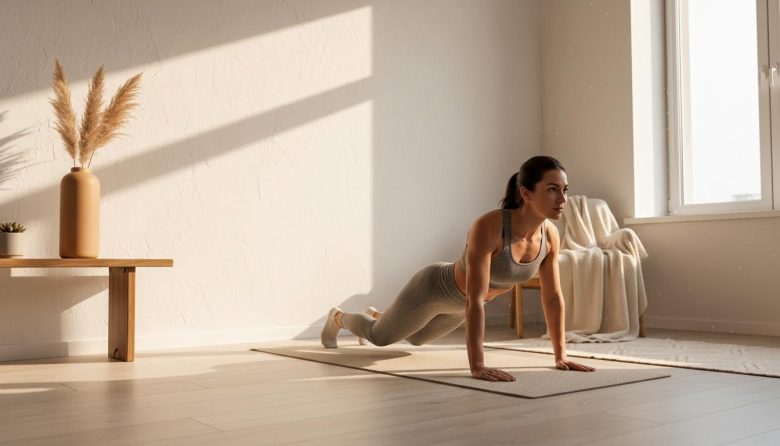
Picture this: You’re motivated to get stronger, but full push-ups feel worlds away. Knee push-ups are your go-to, and that’s totally okay—they’re building real foundation. Many of us start here, juggling busy days with family, work, or just low-energy evenings.
In this guide, we’ll walk through gentle, steady ways to level up, with everyday tweaks that fit your life. No rush, just progress that feels good. You’ve got this, one rep at a time.
Whether you’re sneaking in moves during a kid’s nap or after a long shift, these steps honor your pace. It’s common to feel stuck, but small shifts add up. Ready to build that confidence?
If This Sounds Like You
- You crush knee push-ups but full ones leave you shaking after two.
- Busy mornings mean workouts squeeze into lunch breaks or bedtime.
- It’s okay if form slips on tired days—we’ve all been there.
- You’re ready for that empowering “I did it” moment without overwhelm.
Try This First: Nail Your Knee Push-Up Foundation
Before progressing, let’s make sure your base is solid. Drop to knees, hands shoulder-width apart, body straight like a plank from head to knees. Lower slow, elbows at about 45 degrees from your sides, then push up with control.
Do 3 sets of 8-10 reps daily—maybe while coffee brews or kids eat breakfast. Feel that core engage? You’re set. This builds the strength you need without jumping ahead.
If your hands slip or grip feels weak, many find relief with simple adjustments. When considering Easy Tips for Stronger Grip at Home, it’s important to weave them in here for steady hands during each rep. You’re not alone in those little tweaks.
Your 5 Gentle Steps to Full Push-Ups
-
Step 1: Elevated Hands Push-Ups – Use a sturdy couch arm, stairs, or low table. This reduces the load by 20-30%, making it easier on your shoulders and chest. Aim for 3 sets of 10 reps.
Picture post-dinner TV time: Set hands on the couch, step feet back, and lower your chest toward it. Keep your body straight—no sagging hips. Do this for a week, and you’ll notice control improving.
Many folks love this for low-energy evenings. It fits right in without extra gear. Breathe steady, and smile at the burn—it’s progress.
-
Step 2: Knee-to-Plank Hold – Start in knee push-up position, then shift forward to a full plank for 5-10 seconds per rep. This builds core and shoulder stability gently. Go for 3 sets of 8 holds.
Tie it to your morning stretch routine: After brushing teeth, drop down and hold. Feel your abs tighten? That’s the magic for full push-ups later. It’s okay if 5 seconds feels tough at first.
You’re training your body to stay strong in plank position. Many see quick wins here, especially on consistent days. Keep it light and fun.
-
Step 3: Negative Push-Ups – Get into full plank, lower yourself super slow over 4 seconds, then drop knees to push back up. This strengthens the lowering phase where most struggle. Try 3 sets of 6 reps.
Perfect for low-energy evenings: Dim lights, mat optional, just focus on that controlled descent. Imagine easing down like melting butter. Your muscles learn control this way.
Common for busy parents—takes under 5 minutes. Plateaus? Shorten to 3 seconds. You’re building eccentric strength that carries over big time.
-
Step 4: Halfway Push-Ups – In full plank, lower only to 90 degrees at your elbows, then press back up. Mix in knee push-ups if needed. Aim 3 sets of 8-10 reps.
Work break booster: Clear your desk, hands on edge for elevation if full plank’s too much yet. Power through the halfway point—it’s where real strength grows. Feel empowered?
This bridges the gap perfectly. Many hit this step feeling the shift. Listen to your body; add a breath between reps.
-
Step 5: Full Push-Ups with Rest Tweaks – Attempt 1-3 full reps from plank, rest 10-20 seconds, repeat. Celebrate every partial rep too! Track weekly in a notes app.
Family game night add-on: Do a set while waiting for pizza. Even one clean full push-up? Huge win. Build volume slowly—maybe pair with a Quick Tips to Avoid Workout Fatigue mindset for lasting energy.
You’re almost there. Many reach consistent full sets in weeks. High five yourself.
Progress one step every 1-2 weeks, always listening to your body. It’s normal to linger if needed—steady beats speedy. Many see their first solid full push-ups in 4-6 weeks with this flow.
Track reps in a journal or phone note. Share small wins with a friend for extra motivation. You’ve laid the groundwork beautifully.
Bounce Back from Common Stumbles
Elbows flaring out? Gently tuck them back to 45 degrees—protect those shoulders. Shaky core? Pause and add 20-second planks daily. It’s okay; everyone tweaks form on off days.
Sore shoulders or chest? Take an extra rest day or try gentle arm circles. Plateaus hit us all, especially with stress or skipped sleep. Swap in wall push-ups for active recovery.
Wrists aching? Elevate or use fists. Feeling unmotivated? Shorten sets. You’re human, and progress isn’t linear—gentle resets keep you going.
Remember, when thinking about a 4-Week Home Strength Building Routine, incorporating rest like this prevents burnout. Many bounce back stronger. You’ve got the tools.
Make It Your Own: Everyday Twists
- Family challenge: Have a partner hold a plank while you do elevated pushes—laughter makes it fun.
- Desk warrior: Use your chair for Step 1 during long calls—no one notices.
- Low-energy days: Stick to negatives in bed before sleep, pillow under knees if comfy.
- Pair with evening walks for full-body flow, chatting with a neighbor about your wins.
- Weekend vibe: Time it with favorite music, turning reps into a mini dance party.
- Morning rush: Do holds while eggs cook—multitask like a pro.
These tweaks fit real life, from solo commutes to group hangs. Experiment gently. What feels best for your routine?
No two paths are the same, and that’s the beauty. Many mix in yoga breaths for calm. Own it your way.
Keep the Good Vibes Rolling
You’re building more than strength—confidence that spills into work chats, parenting wins, or quiet evenings. Every rep honors your effort. Proud of you already.
Share your first full push-up story below—we’re in this together. What’s one step you’ll try this week? Grab a mat and start small today.
Frequently Asked Questions
How often should I do these progressions?
Aim for 3-4 days a week, with at least one rest day between. Your muscles grow during recovery, so honor that space. It’s okay to adjust for busier weeks—consistency over perfection wins.
What if my wrists hurt?
Switch to push-up handles, fists, or elevate hands higher. Many find instant relief and even better form this way. Start slow; pain-free is key for long-term joy.
Can I progress if I’m over 40 or postpartum?
Absolutely—bodies adapt beautifully at any stage. Go slower, maybe film your form or chat with a trusted trainer. You’ve got wisdom on your side; celebrate every hold.
How do I know when to move to the next step?
When 3 sets feel strong and controlled, not strained or wobbly. Trust your body’s signals over a calendar. Many linger a week extra—it’s your journey.
Will this help with other exercises?
Yes! Stronger push-ups boost planks, rows, and daily lifts like groceries or kid-carrying. It builds that upper body resilience we all crave. Everyday tasks feel lighter soon.
What if I miss a week?
No biggie—jump back to your last comfy step. Life happens to everyone. Gentler restarts keep the momentum without guilt.
Do I need equipment?
Nope, just your body and maybe a couch or stairs. Handles or a mat are nice bonuses if handy. Keep it simple for steady home flow.