Picture this: you’re in the middle of a family game of tag, or maybe just trying to weed the garden on a sunny afternoon, and your legs start to wobble like they’re made of jelly. Sound familiar? Bodyweight squats are one of those simple moves that can make everyday life feel stronger and smoother—whether you’re chasing after kids, carrying groceries up the stairs, or keeping up during a weekend hike. The best part? You don’t need fancy equipment or a gym membership; just your own body and a bit of space in your living room or backyard.
Many folks feel unsure at first, knees knocking together or balance tipping off. But here’s the good news: with a few gentle tweaks, squats become a reliable friend for building leg strength, core stability, and that confident energy you carry through the day. They’re perfect for all levels, from couch-to-5K starters to busy parents sneaking in movement between carpools. We’ll walk through five straightforward tips, starting with the easiest entry point and ways to make it fit your life perfectly.
These aren’t about perfection; they’re about progress that feels good in your body. Think steady wins, like how a daily coffee ritual perks you up over time. Ready to turn wobbly squats into your secret weapon? Let’s make squats feel good together.
If This Sounds Like You
You’re not alone if your squats feel more like a teeter-totter than a power move, especially on those low-energy mornings when you’re rushing through breakfast prep. Many of us have been there, heels lifting off the floor as knees wander inward during a quick set before work.
Maybe you’re eyeing stronger legs for playing with the kids or tackling yard work, but gym-style perfection seems out of reach amid your daily routine. It’s okay if form feels shaky—plenty start exactly here, and small shifts make a big difference.
Or perhaps you’ve tried before, only to quit when it didn’t click right away. You’re in good company; it’s common, and tweaking for your body turns that around gently.
Try This First: The Easy Wall Squat Hold
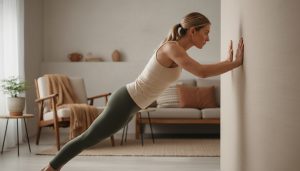
Before diving into full squats, let’s ease in with the simplest starter: the wall squat hold. Stand with your back against a wall—maybe in your kitchen during a coffee break—and slide down until your knees are at a comfy angle, like sitting in an invisible chair. Hold for just 20 seconds, feeling your legs wake up without any pressure.
Breathe steadily, in through your nose and out through your mouth, letting tension melt away. Imagine the wall as your supportive buddy, steadying you like a friend during a chat. You’ve got this—one hold at a time builds that quiet confidence, and it’s perfect for low-energy days.
If your muscles feel tight beforehand, warming up with something like How to Wake Up Muscles with Gentle Holds can make this even smoother. From here, you’re primed for the full tips. Notice how your balance settles already?
Your 5-Step Path to Squat Success
Follow these five steps in order, and many notice smoother movement within a week. They’re building blocks, not rules—practice them one at a time during short daily sessions. Let’s go!
-
Step 1: Anchor Your Feet Shoulder-Width with Toes Slightly Out
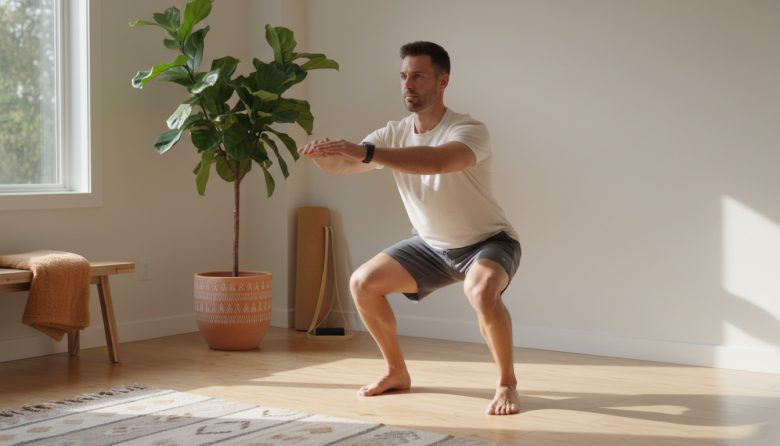
Start by placing your feet like you’re about to sit in a low patio chair—shoulder-width apart, toes turned out just a smidge, about 15 degrees. This setup spreads your weight evenly, like roots grounding a tree during a breeze, preventing that tippy feeling many get at first.
Feel the floor under your whole foot, not just the toes. On a busy morning, test this stance while waiting for the toaster—it’s that everyday simple. It sets a stable base for everything else.
-
Step 2: Hinge Hips Back Before Bending Knees
Push your hips back first, as if reaching for a stool just behind you, before letting your knees soften. This keeps pressure off your knees, avoiding the forward lurch that’s super common when you’re distracted, like during a phone call multitask.
Picture closing a door with your hips—gentle and controlled. Many find this shift alone makes squats feel safer and stronger right away. Practice the hinge solo if needed; it clicks fast.
-
Step 3: Lower Until Thighs Parallel (or Your Happy Depth)
Slide down until your thighs are parallel to the floor, or whatever depth feels good without strain—listen to your body like tuning into a favorite song. It’s okay if that’s higher at first; progress comes steadily, not forced.
Think of it as a friendly elevator ride down. For those with tight hips from desk days, this builds range gently over time. No rush—your version counts.
-
Step 4: Drive Up Through Heels, Squeezing Glutes
To rise, press through your heels like rooting into soft earth, and give your glutes a little squeeze at the top. This powers from your legs, sparing your back the work it often sneaks into during tired evenings.
Feel the lift from the ground up, strong and steady. Pair it with a desk worker’s reach overhead for extra flow—many love how it energizes a midday slump. That’s your strength shining.
-
Step 5: Breathe Deep—In on Down, Out on Up
Inhale as you lower, filling your belly with calm air, then exhale strong as you rise. This rhythm keeps energy flowing, especially on stressful days when shallow breaths make everything harder.
It’s like syncing with ocean waves—smooth in, powerful out. If breath feels off, slow to one squat at a time. This ties it all together beautifully.
Practice 3 sets of 10 daily, maybe during TV commercials. Small, consistent reps add up to legs that carry you effortlessly. Feeling the difference already?
Make It Your Own: Fun Twists for Your Life
Once the basics click, play with variations to keep it fresh and fitted to you. For beginners or sore knees, try pause squats: hold at the bottom for 3 seconds, building control like savoring a warm hug.
Need an energy boost? Add a gentle jump at the top—soft landings keep it kind, great for pre-walk warm-ups. Desk workers, reach arms forward or overhead as you squat; it loosens the upper body too.
Make family time fun with squat challenges during dinner prep, or link it to your Simple Beginner Guide to Home Workouts routine. Tweak for your pace—slower for recovery days, quicker for playful vibes. Which variation calls to you? Share in the comments and tag a friend to try together!
How to Keep the Momentum Going
Steady progress comes from tuning into how squats feel, not just counting reps—note if balance steadies or stairs feel easier. Pair them with short walks, like after dinner strolls, to let legs recover while building habits.
Rest days are your friend; muscles grow stronger in the downtime, so it’s okay to skip if life’s hectic. Many build lasting strength this way, weaving it into real routines without burnout.
For light progression, explore Your First Guide to Light Strength Training alongside. You’re not alone—folks everywhere cheer each other on. Keep showing up; your body’s grateful.
Got Questions? Common Squat Worries Answered
Why do my knees hurt during squats?
Knee twinges often come from knees drifting forward too soon—focus on hinging hips back first, like in Step 2. It’s common with tight muscles, so warm up gently and stick to your happy depth. If pain lingers, ease off and chat with a doc; most find relief with form tweaks in days.
How many squats should I do to start?
Begin with 3 sets of 5-10, spread through the day—like morning, lunch, evening. Listen to your body; fewer is fine on tired days. Many see strength gains in a week this way, building up naturally without overwhelm.
Can I do these if I’m new to exercise?
Absolutely—start with wall holds and Step 1 footing. It’s designed for beginners, using everyday stability like kitchen counters if needed. You’re in good company; countless newcomers thrive here, gaining confidence step by step.
What if I can’t get low yet?
That’s totally normal—go to whatever depth feels strong, even a shallow dip. Progress comes with time, like deepening a stretch over weeks. Use a chair for support initially; it builds range kindly.
How do I know my form is improving?
Watch for steadier balance, no knee wobbles, and easier daily tasks like standing from low seats. Film a quick video weekly or note how glutes engage more. Small feels add up—celebrate them!