Picture this: it’s the end of a long day, you’re wiped out from work calls, kid pickups, and that endless to-do list. The couch calls your name, but deep down, you know a little movement could shift everything. I’ve been there too—feeling stuck in a rut where strength seems like a distant dream.
That’s why I created this daily 15-minute full body strength plan. It’s designed for real life, squeezing in quick wins that build muscle, spark energy, and boost your confidence without overwhelming your schedule. Imagine carrying groceries up the stairs like it’s nothing or chasing after little ones with ease.
Just 15 minutes a day, no gym needed, and you’ll start feeling stronger right away. Many folks tell me they notice better posture and a happier mood after a week. It’s approachable, fun, and totally modifiable for beginners.
Stick with me, and we’ll walk through it together. You’ve got this—let’s make strength part of your everyday rhythm.
Why 15 Minutes a Day Builds Strength You Can Feel
Short bursts like this add up fast. Science shows that consistent, brief strength sessions strengthen muscles, improve bone density, and even lift your mood through endorphin release. It’s not about hours in the gym; it’s steady progress.
Think about everyday wins: lifting that heavy laundry basket without strain or standing taller after a desk day. Many people find their energy soars, helping them tackle family routines with more pep. You’re not alone if you’ve skipped workouts before—starting small changes that.
Plus, it eases daily tasks, like gardening or playing with pets. Pairing this with basics from Your First Guide to Light Strength Training makes it even more effective for newcomers. Gentle consistency beats intense efforts every time.
It’s okay if progress feels slow at first. Your body adapts, and soon you’ll feel capable in ways that surprise you. Ready to see how?
If This Sounds Like You
You’re juggling work deadlines and family dinners with barely a moment to breathe.
Low-energy evenings have you scrolling on the phone instead of moving your body.
You’ve dipped into workouts before, but they felt too complicated or time-consuming.
It’s okay if strength training seems out of reach right now—many of us start exactly here, and that’s where the good stuff begins.
Try This First: Your Super-Simple Starting Point
Before diving into the full flow, ease in with chair squats. Sit on the edge of a sturdy chair, feet flat, then stand up slowly using your legs—not your hands. Do this for 2 minutes, twice a day, like once mid-morning and once after dinner.
Why start here? It builds leg strength and confidence without floor work. Beginners, keep hands on the chair for support if needed; rise only halfway at first.
This tiny habit creates momentum. Many share how it snowballs into more. You’ve got the foundation—now let’s expand it.
Your 15-Minute Full-Body Flow: Step-by-Step
This no-equipment plan fits anywhere: living room, kitchen, even hotel rooms. Start with a 2-minute warm-up, flow through three rounds of a 10-minute circuit (about 3 minutes per round with short rests), and end with a 3-minute cool down. Breathe steadily, move with control, and smile—it’s your time.
Beginner tip: Shorten times to 30 seconds per exercise if it feels big. Rest 15-30 seconds between moves. Listen to your body always.
- Gentle Warm-Up (2 minutes): March in place, swinging arms loosely for 1 minute. Add gentle torso twists for the next minute. This gets blood flowing without strain. Mod: Stay seated and pump arms if standing is tough.
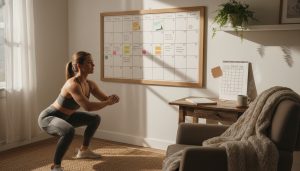
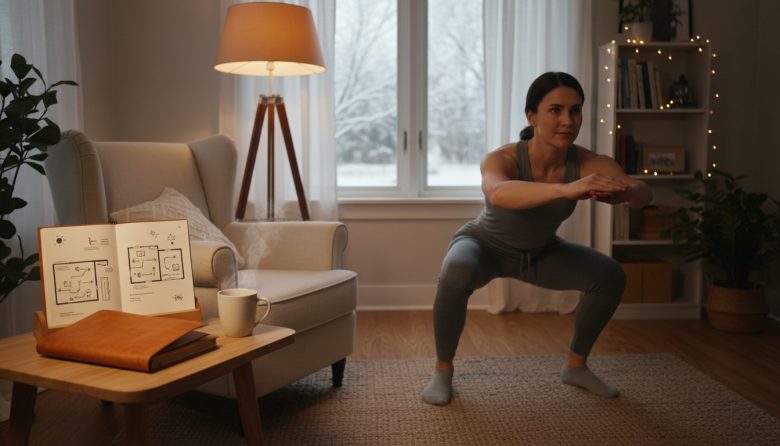
- Squat Variation (45 seconds): Feet hip-width, lower as if sitting back into a chair, knees over toes. Push through heels to stand. Targets legs and glutes. Beginner mod: Hold onto a counter; squat to a higher level, like touching the chair.
- Push Progression (45 seconds): Wall push-ups work best—hands on wall at shoulder height, bend elbows to lean in, then push back. Builds chest, shoulders, arms. Mod: Step closer to wall for easier angle; do fewer reps slowly.
- Lunge or Row Alternative (45 seconds): Alternating reverse lunges: step one foot back, lower until both knees bend 90 degrees, then switch. Or do standing rows by pulling elbows back like squeezing a pencil between shoulder blades. Great for legs, balance, back. Beginner: Hold a wall for lunges; shorten step. No jumping ever.
- Plank Hold + Rest/Transition (45 seconds): Forearm plank on knees or toes—body straight like a board, core tight. Hold as long as comfy, then rest. Strengthens whole core. Mod: Wall plank or seated knee lifts. Breathe deeply.
Repeat the circuit three times. Total: around 15 minutes. Form matters more than speed—quality builds real strength.
If evenings suit you better, blend this with an Evening Wind-Down Strength Plan for Relaxation to unwind while strengthening. It flows naturally into better sleep.
Make It Your Own: Tweaks for Real Life
Life isn’t one-size-fits-all, so neither is this plan. Seated versions shine for chair-friendly days: swap squats for seated leg lifts, pushes for wall presses from sitting.
Add family fun—do squats together during TV commercials or lunges in a conga line. Light water bottles as weights? Sure, hold during rows for extra challenge.
Progress gently: Week one, two rounds; add time weekly. If desk slouching bugs you, weave in pulls inspired by How to Fix Slouching with Easy Rows. You’re not alone if tweaks take time—many adjust and love it more.
Low-energy day? Halve times. It’s flexible, so it sticks. What feels good for you?
Feel Good After: Cool Down and Next-Day Tips
End with easy stretches: stand tall, reach arms overhead for 20 seconds, then fold forward gently. Quad stretch per leg, holding a wall. Breathe deep, feel the release.
Next day, sip water often—muscles thank you. Walk lightly if sore; it flushes tension. Consistency shines here, one day at a time.
You’re building habits that last. Proud of you for showing up.
What’s one tweak you’ll try first? Share in the comments below, and tag a friend who could use this quick boost—spread the strength!
Frequently Asked Questions
Do I need any equipment to get started?
Nope, just your bodyweight and maybe a soft mat or towel for comfort on the floor. Everything’s home-friendly, using walls, chairs, or open space. Many start with zero extras and see great results.
How often should I do this plan?
Aim for 4-5 days a week to build strength steadily. Rest days are key—listen to your body and skip if needed. It’s sustainable, not all-or-nothing.
What if I’m sore the next day?
That’s normal, especially early on; it means your muscles are adapting. Gentle walks, warm showers, or foam rolling help. Ease back in lighter—soreness fades with time.
Can beginners really see changes?
Absolutely—many feel stronger, more energetic in 2-4 weeks. Small wins like easier stairs add up. Track how clothes fit or energy shifts; celebrate them.
Is this safe if I have joint issues?
Yes, with mods like seated or wall versions to reduce impact. Always prioritize form over reps. Chat with your doctor first if concerns linger—we want it comfy for you.